UX CASE STUDY
FitJourney
An integrated fitness app that adapts workouts to a woman's menstrual cycle, mood and sleep — turning casual users into long-term members.

01 The Challenge
Users abandon fitness apps quickly due to complexity and lack of personalization. Women in particular need workouts that adapt to their stress and mood — but most apps offer one-size-fits-all, goal-only frameworks.
02 Overview
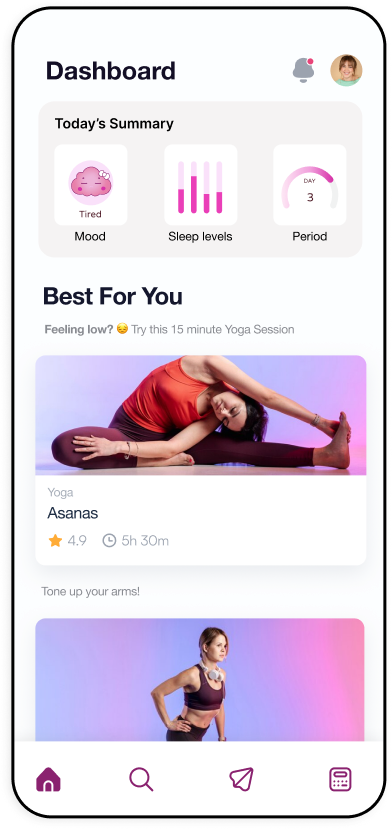
FitJourney is an integrated fitness app feature that leverages data from a period tracker, mood and sleep tracking to deliver personalized, cycle-aware workouts — helping women achieve a balanced approach to their health during different days of their menstrual cycle.
03 Design Process
A double-diamond approach over a 5-day sprint — diverging to explore the problem and solution space, then converging on a validated, buildable feature.
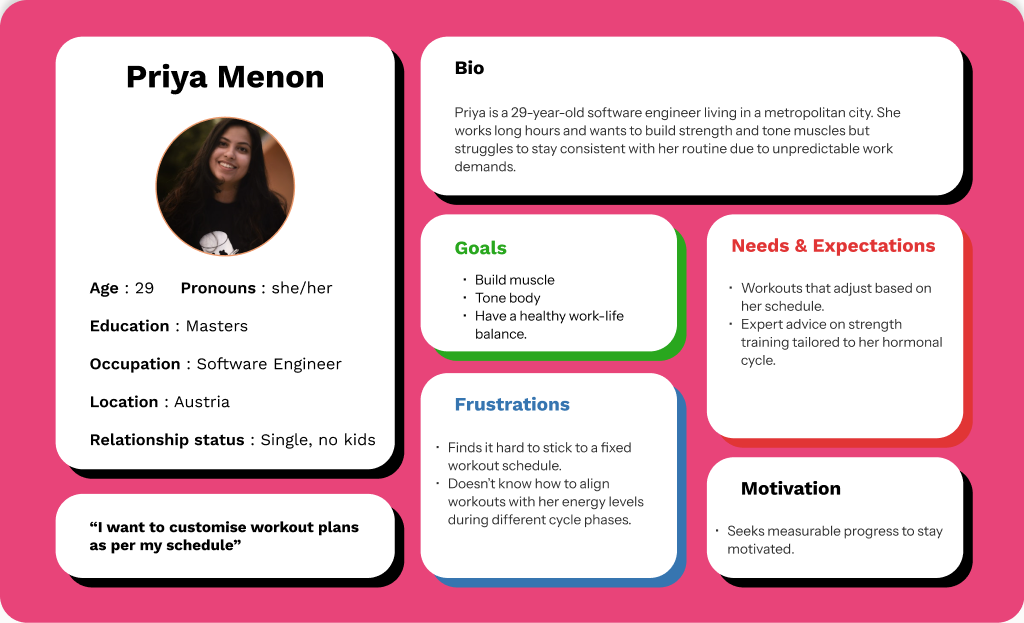
04 Meet the User
05 Predicted Outcomes & KPIs
06 Low-Fidelity Prototypes
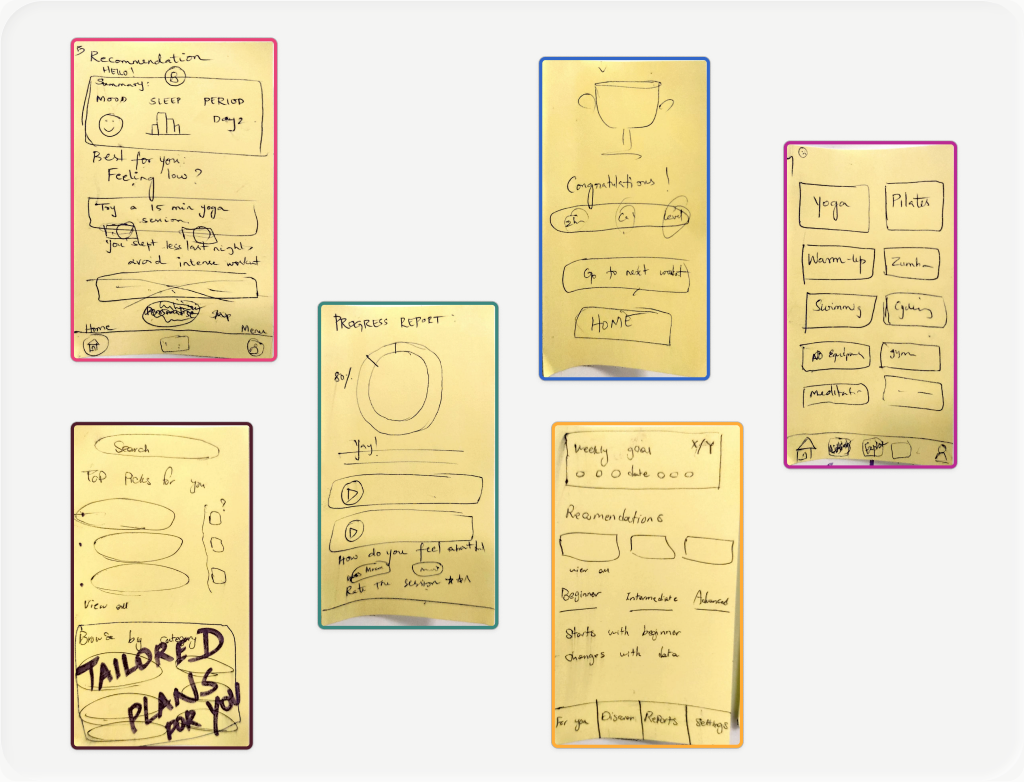
Before committing to visuals, we sketched the core flows as low-fidelity wireframes — pressure-testing structure and navigation with the team before investing in UI.
07 High-Fidelity Screens
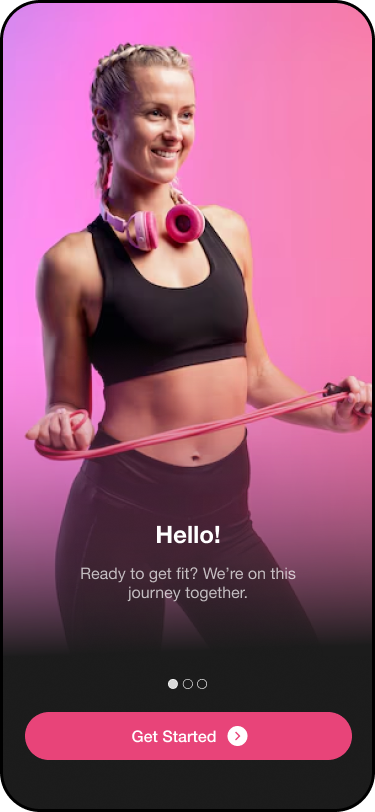
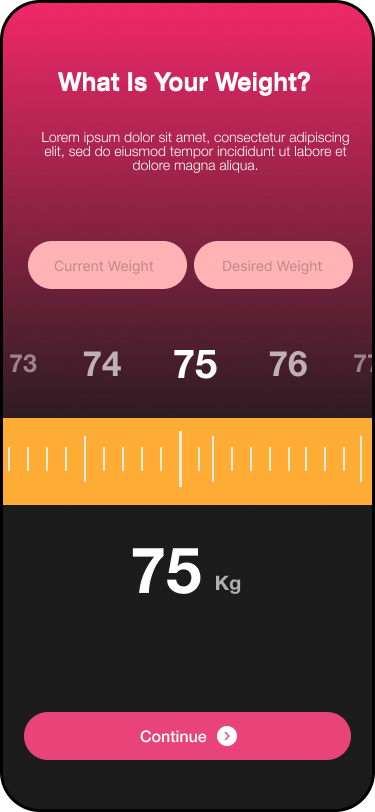
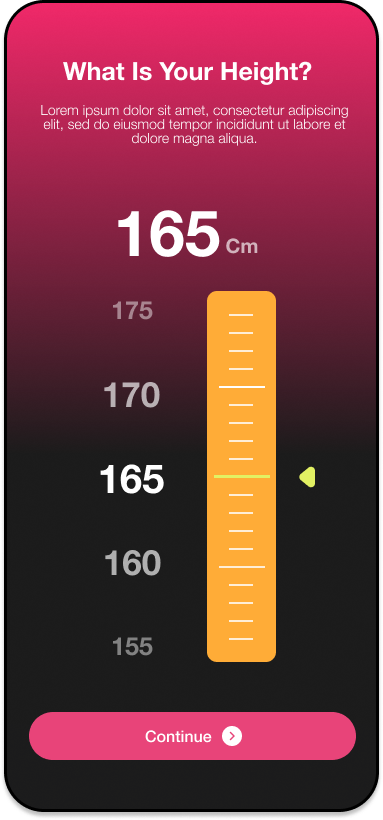
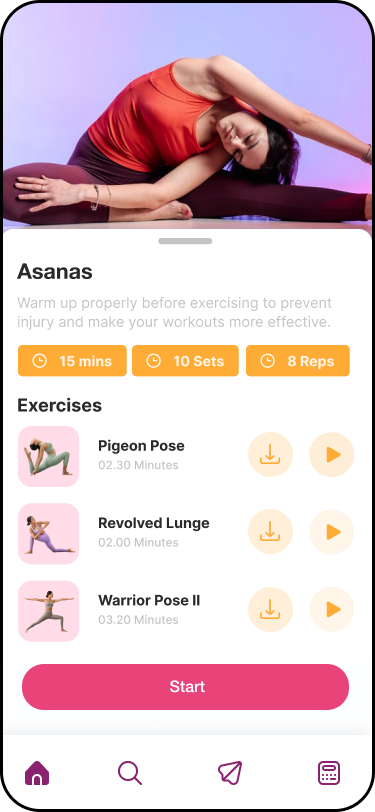
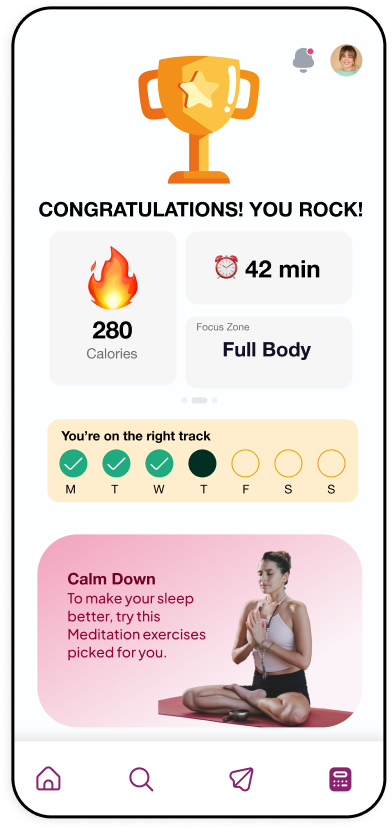
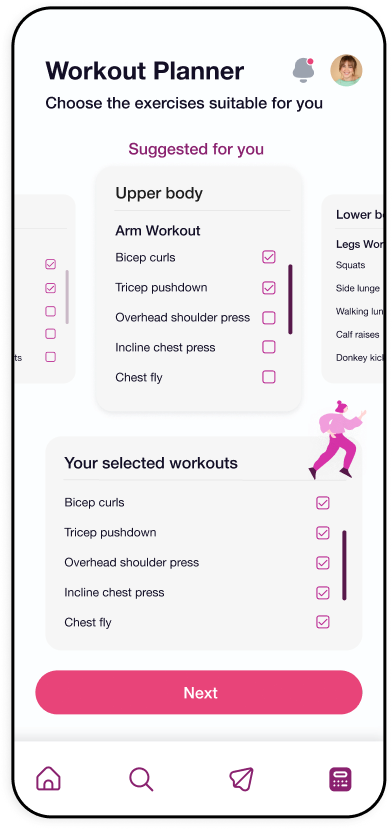
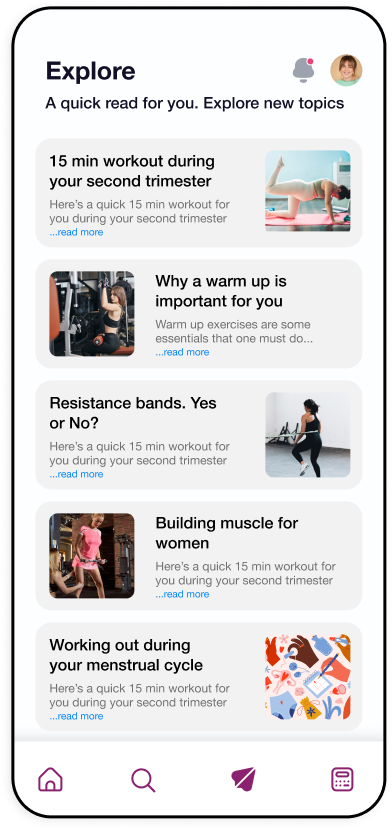
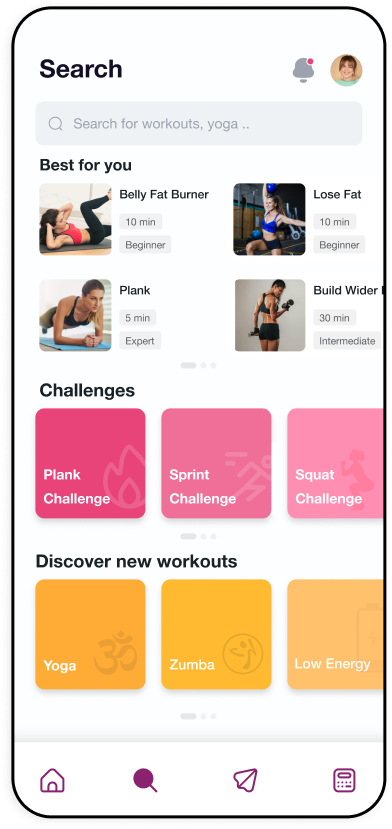
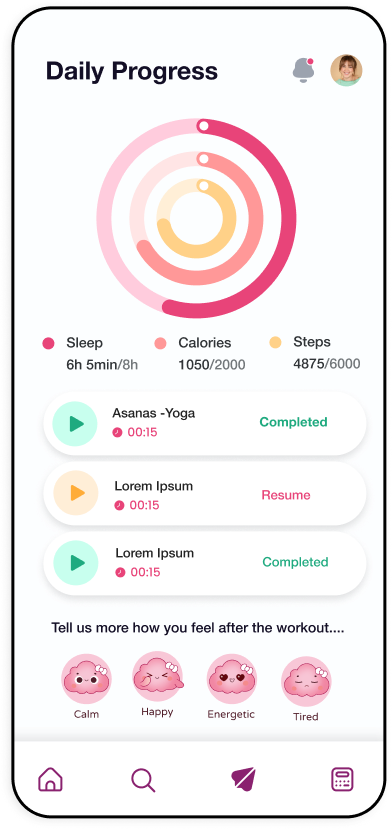
High-fidelity screens spanning the full journey — onboarding, a personalized dashboard, a customisable workout planner, explore, and daily progress.
08 Learnings & Next Steps
Our biggest takeaway was that seamless design and technical feasibility have to move together — the most elegant flow still has to be buildable within the sprint's constraints.
Data visualizations
Backend event logs can power graphs and cycle visualizations for the user.
Handling missing data
Adapt to incomplete inputs and still generate useful recommendations.
Offline access
Include offline content for gyms and outdoor environments.